
- News
- City News
- delhi News
- When School Came Knocking On Doors Of These Poor Kids
Trending
This story is from May 30, 2024
When School Came Knocking On Doors Of These Poor Kids
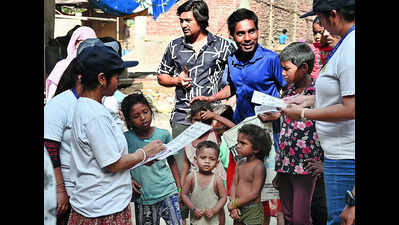

When the mother appeared, the volunteer explained they were a team of school officials, cluster resource centre coordinators and teachers who wanted children to attend school. Luckily, the team ran into Saba, 13, whose alcoholic father abandoned her, her mother and brother three years ago. With the mother, a domestic worker, the only one left to make sure the family survived, Saba’s aspirations were snuffed out and she dropped out of school.
The team explained to Saba’s mother that she need only submit a residence proof, no other details, neither bank account details nor other documents, for her kids to be admitted to the nearest govt or municipal school. This was courtesy a pilot project called Vidyalaya Pravesh Abhiyaan, initiated by South district deputy education officer Ashok Kumar Tyagi and Samagra Shiksha, a central govt programme launched in 2018 to enhance the quality of education at the school level.
A spark reignited in Saba's eyes when she realised she was returning to school, this time with her brother in tow.
Aryaan, an orphan living with his grandparents, felt this heart soaring when he was told he was going to school. “My nani taught me the alphabets and I learnt the basic from the internet. I can’t believe I will now get free study materials, meals, books and uniforms. I can’t wait to finally join a school on July 1,” exulted the 12-year-old. Because he hasn’t had prior education, he will join the special training centre first to fill the learning gap and then join Class V.
Dhol player Nakeeb, father of two girls, was glad he was home when the admission drive took place. He said, "We weren’t able to find dignified jobs because of our lack of education. But I want both my daughters to study hard and become teachers.”
Tyagi explained that many children from economically weaker sections did not attend school at all, while others studied in unrecognised gali schools. “These schools don’t own land to qualify for govt recognition and have issues related to student safety and security. They are income-driven and need to be discouraged,” he said. “My purpose with this initiative is to raise awareness that education is accessible and is every child's right.”
Mandeep Kumar, principal of Chhatarpur’s Acharya Tulsi Sarvodaya Bal Vidyalaya, interacted with kids and reassured parents about the admission process. Kumar said, “Children drop out when their migrant parents move to other places. Our teachers phone the students if they remain absent on consecutive days and talk to their parents,” said Kumar. “We try to retain the kids unless they are returning to their villages.”
The team has surveyed over 100 households, mostly in Ambedkar Colony, since last year, trying to detect children who aren’t attending school. Volunteer teacher Shima Ghosh said, “Sometimes landlords refuse to provide residence proof that parents need to admit their kids. The parents also are often illiterate themselves and unsure of birth dates, Aadhaar cards and bank details, so they hesitate to enrol their kids. We are making the process easier for them.”
Clicking a photograph of a smiling parent who had just filled an admission form, Jyoti Kalra, district coordinator, Samagra Shiksha, told TOI, “One kid had a foot disability and his ignorant parents didn’t admit him to school thinking it would be of no use. We counselled them and assured them that education could change the family’s life.” Thankfully, this initiative is taking care of such ignorance.
End of Article
FOLLOW US ON SOCIAL MEDIA









Photostories

Hot Picks
TOP TRENDING
Popular Categories
Hot on the Web
Top Trends
IND vs NZ Live ScoreRohit SharmaLiam PayneUGC Net June ResultSL vs WI Live ScoreIND vs NZ HighlightsUGC NET ResultInfosys Q2 ResultHaryana Cabinet Ministers ListJustin TrudeauFlights Bomb ThreatJharkhand Election ScheduleMaharashtra Election 2024US Presidential Election 2024Maharashtra Election ScheduleJharkhand Election ScheduleLive Cricket Score
Trending Topics
Diwali WishesDhanteras 2024Fake PaneerLiam PayneVettaiyan CollectionVicky Vidya Ka Woh Wala Video CollectionLawrence BishnoiJigra OTT ReleaseCow GheeBigg Boss 18Salman KhanShraddha KapoorRenukaswamys WifeSharad Purnima Moonrise TimeSwatantrya Veer SavarkarSharad Purnima 2024Top Load Washing MachinesBest Premium LaptopsIntel LayoffsWordle Answer
Living and entertainment
Latest News
Drake's pigtails spark an online debate; netizens are divided over bold fashion move and midlife crisisInjury scare for Team India as Rishabh Pant hobbles off the fieldIs Kamala Harris stuck in an interview doom loop?Gemini, Daily Horoscope Today, October 18, 2024: Prioritize mental well-being'We are all on the same team now': Senate minority leader Mitch McConnell defends past remarks on Donald TrumpCATS YouTube codes for October 17, 2024: Enhance your gameplay and know how to redeem the codesGranddaughters of 2 Haryana former CMs in Saini’s teamCitizenship under Assam accord: 4:1 SC verdict upholds validity of Section 6A; dissenting judge says provision 'has become more prone to abuse'Bengaluru trekker helped CEC spend night at uninhabited houseStudent kills self in Kota, 15th this yr'Love Rohit Sharma's honesty': Sanjay Manjrekar calls India captain 'top man''Aaqib bhai, Pakistan cricket ko kya ho gaya?' Gautam Gambhir asked - Watch'Secret service needs reform': Independent probe panel on Trump's assassinationBreast cancer fighter Hina Khan shares a video of people who have inspired her during her journey; watchAt 25,007 weekly departures, 5% more domestic flights this winter: DGCAUGC NET Result 2024 OUT: Direct link to check subject/category wise cut-off'Jigra' box office collection day 7: The Alia Bhatt starrer sees a further drop in numbers as it completes its one week run, inches closer to Rs 25 crore41 students of Thane civic school hospitalised with food poisoning symptoms
Copyright © 2024 Bennett, Coleman & Co. Ltd. All rights reserved. For reprint rights: Times Syndication Service